Why Underlying Tech Matters So Much for Passenger Flow Management
Having personally introduced, configured, and calibrated flow management systems in airports of all sizes across the Americas, I can assure you that the topic is far more complex than many expect.
Xovis’ passenger flow management system is currently used at more than 120 airports worldwide. With a portfolio like that, you can rest assured that we have repeatedly encountered new operational scenarios that have required tailored solutions. The recent rollout of the Entry Exit System in Europe is another wrinkle in processes that is prompting more airports to revisit their processes and the solution measuring them. What they discover is often an unpleasant surprise.
Airports are comprised of diverse and highly complex processes, many of which changes without notice. If your airport is relying on a solution that doesn’t adapt to those changes—and I’m talking about daily change without notice—you’re selling your team short.
Xovis knows, I know, and you know that those changes are just a reality of airport operations. A retractable barrier gets opened, a lane is closed for cleaning, Christmas decorations are being removed from the ceiling. That’s why Xovis developed a new, more intelligent approach to queue detection—one that is increasingly based on AI and advanced machine learning algorithms.
These algorithms don’t only analyze passenger movement, behavior, and patterns—they also evaluate contextual characteristics such as the direction in which people are looking. This makes it possible to determine far more accurately whether someone is actually part of a queue or simply passing through the area.
High-quality passenger tracking is essential for robust queue detection and accurate data collection. However, achieving reliable tracking can be particularly challenging in large, crowded areas, where passengers may remain in the queue for extended periods before passing through a checkpoint or process.
One key factor is occlusion. To ensure that no passengers are missed, we must prevent taller individuals from physically blocking smaller ones and making them invisible to the sensor. It is important to understand that occlusion is a physical reality rather than a limitation of a specific technology. Every sensing technology faces the same challenge.
Even though all tech faces occlusion challenges, there are factors that minimize instances. For example, ceiling-mounted sensors have a much lower occurrence of occlusion compared to wall-mounted sensors. Ceiling-mounted sensors significantly reduce the risk of passengers blocking one another from view. When observing from the side, especially in areas with lower ceilings, occlusion can easily occur and negatively impact data quality.
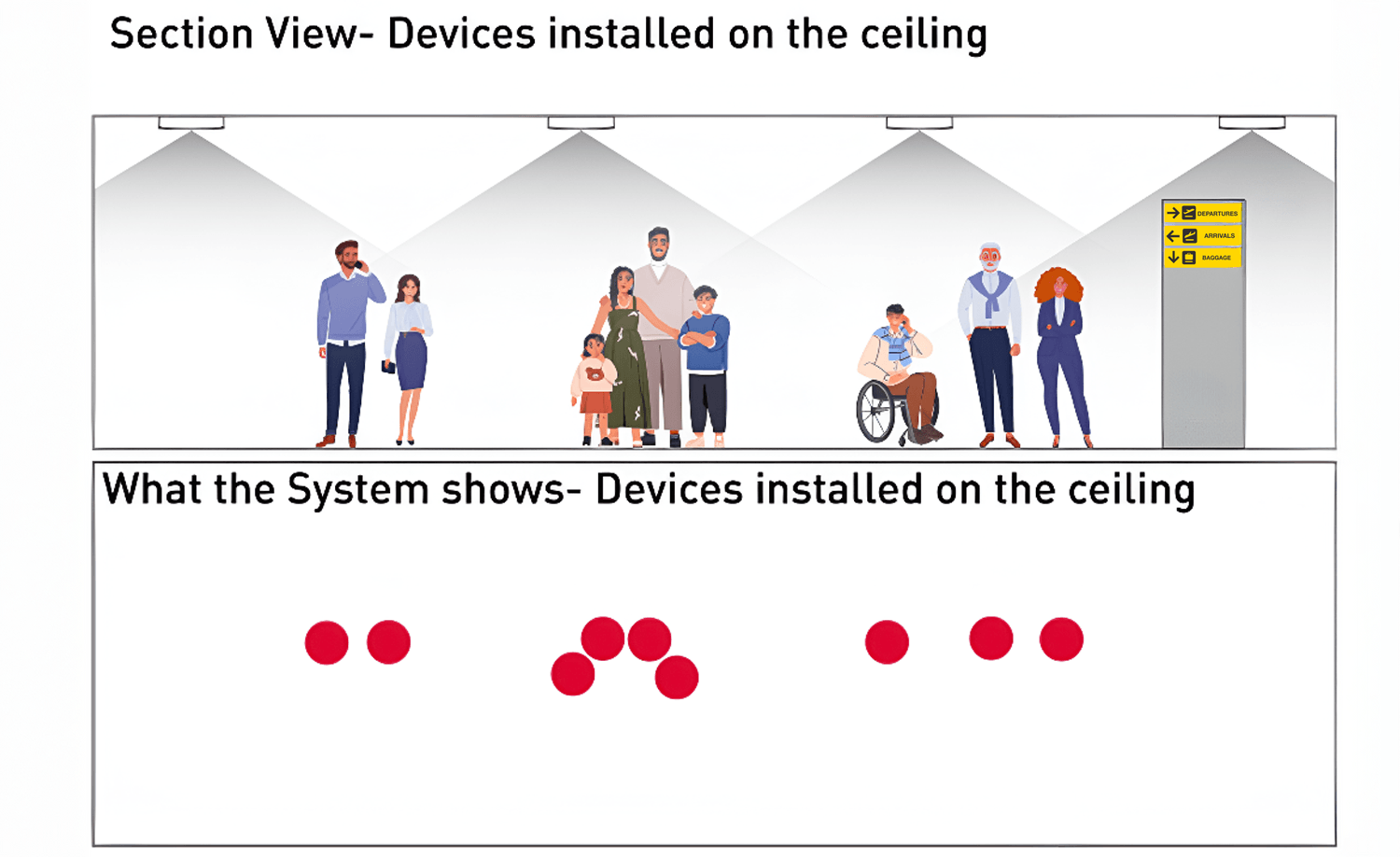
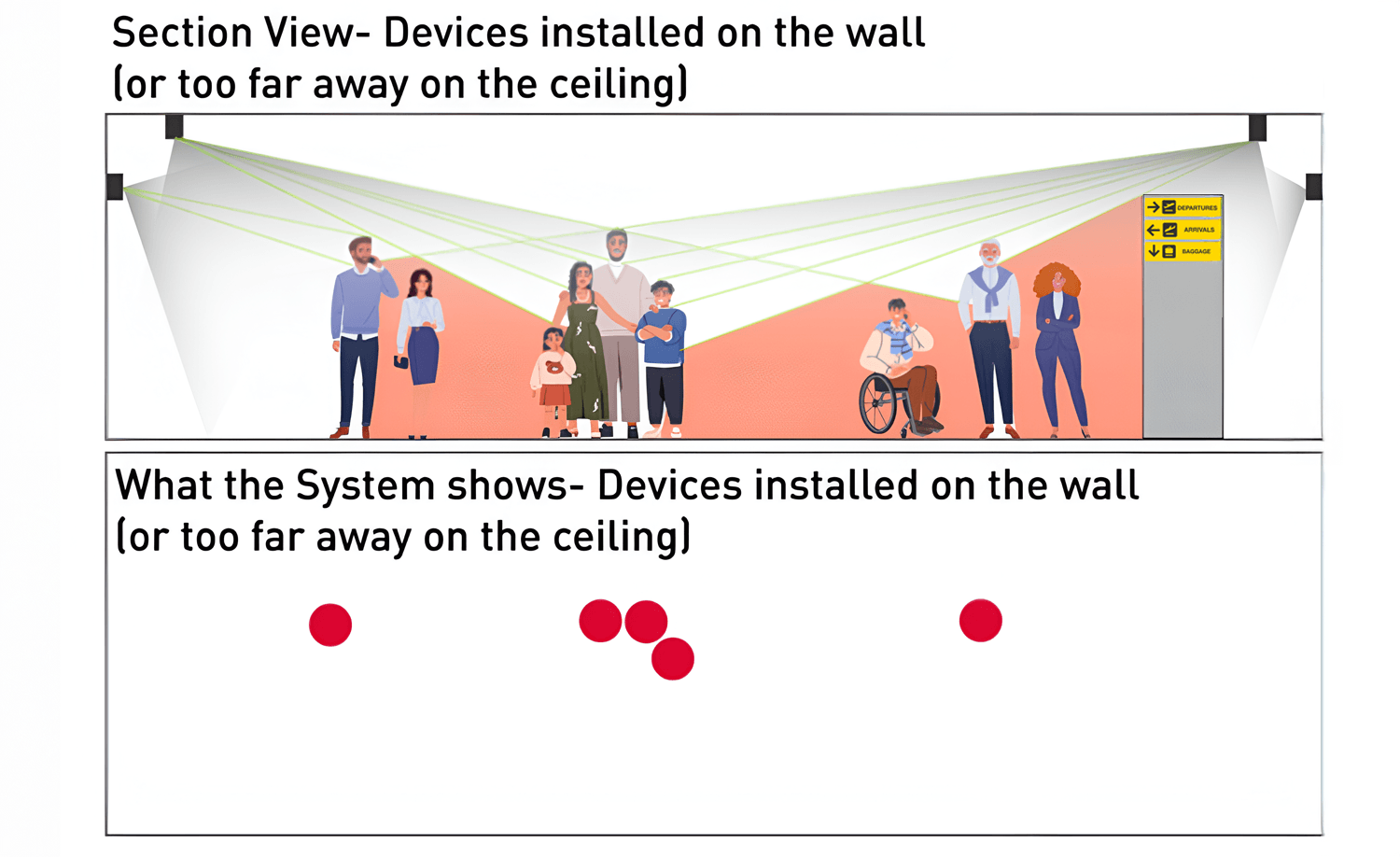
There are, of course, methods for reassigning lost tracks to newly generated ones. It’s a method Xovis has been using for several years that generally performs well. However, in dense queues, and particularly when the scene is not captured from a true top-down perspective, it can become difficult to correctly match lost tracks to the right new ones.
Already today, our sensors use embedded AI for on-sensor recognition of personal attributes, such as gender expression, apparent age estimation, and viewing direction. All of these capabilities rely on processing rich data sources. It is evident that the potential of AI goes far beyond what is currently deployed, and we expect substantial advancements in the months and years ahead.
What if a lost track could be clearly identified and reassigned to the correct person based on attributes such as appearance, clothing color or type, age group, or behavioral patterns—all while remaining privacy-compliant, with no data leaving the sensor or being stored?
In that case, the already high tracking quality approaches perfection, which, together with advanced queue detection algorithms, enables a new level of performance.
With Xovis’ new large-area analytics PF-Series sensor packed with ten times more processing power than other sensors, such scenarios are becoming increasingly realistic. And the great thing with the PF is that, just like other Xovis sensors, all calculations and data processing happen directly on each individual sensor. As an edge device, our sensor does not rely on a large local server infrastructure to perform its tasks—it simply does everything on its own.
One thing is clear. To enable truly seamless tracking and fully leverage the future potential of AI, the underlying technology must process image-based data. These data sources are rich in information and provide the foundation for improving tracking performance, strengthening algorithms, and ultimately delivering even greater data accuracy.
As airport operations continue to evolve, the ability to adapt measurement technology to real-world conditions will become increasingly important. In the end, the quality of the insights you get will always depend on the quality of the technology collecting the data.
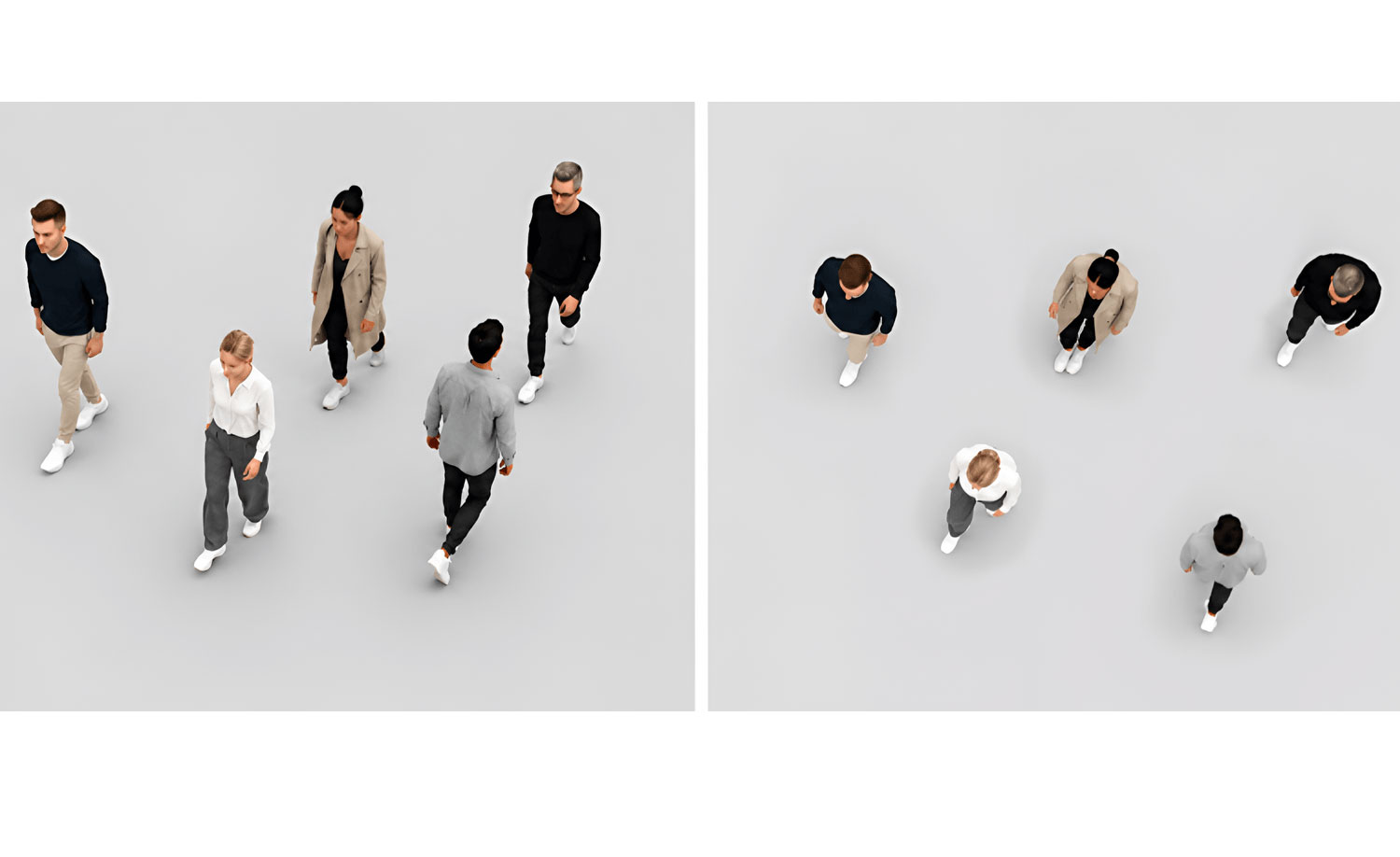
Vision-Based System
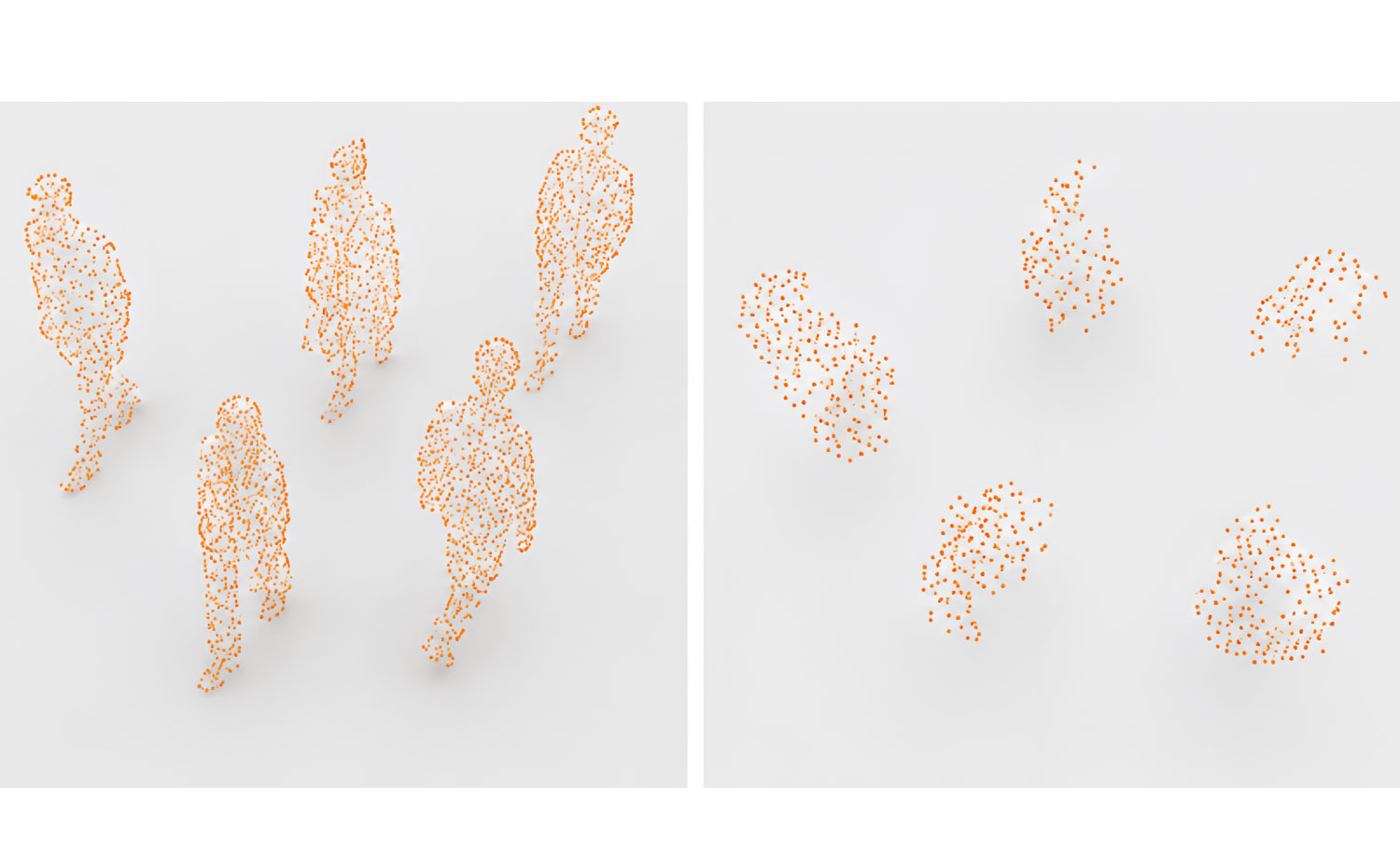
Point Cloud System
Tags: | passenger flow management | airport operations | queue detection | AI analytics | passenger tracking |