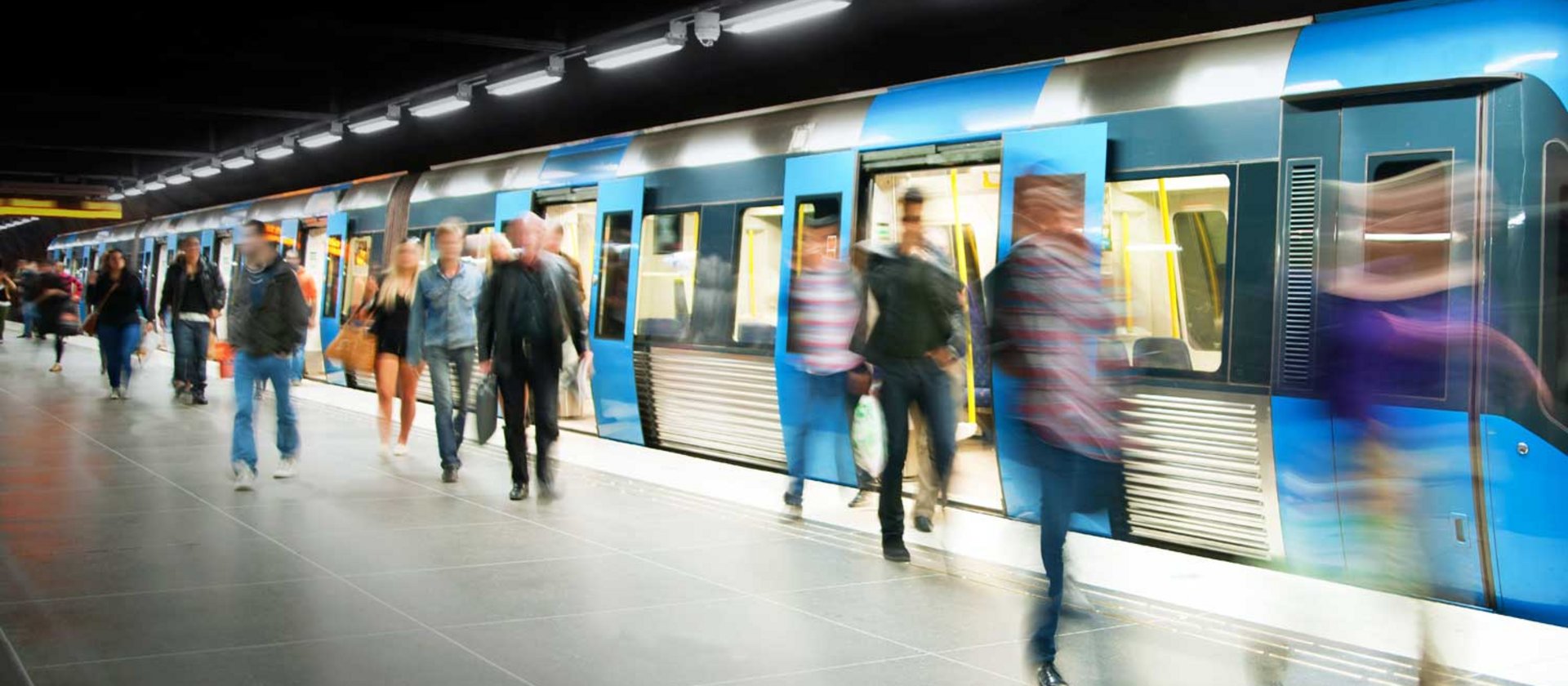
Faster Passenger Exchange Times with Accurate APC Data
Challenge
Tens of millions of passengers board public transportation vehicles around the world every day, and just as many alight. Ensuring that the time between these movements does not disrupt operations is a key objective for mass transit operators focused on cost efficiency and passenger experience.
Passenger exchange time measures the time elapsed between a vehicle door opening for passenger movement and the door closing after boarding and alighting are complete. It is an important KPI for public transportation operators committed to:

Network operations:Preventing passenger exchange times from causing delays.
-
Passenger safety: Ensuring platform and vehicle safety during passenger exchanges.
-
Continuous improvement: Using accurate exchange-time measurements to identify opportunities and challenges.
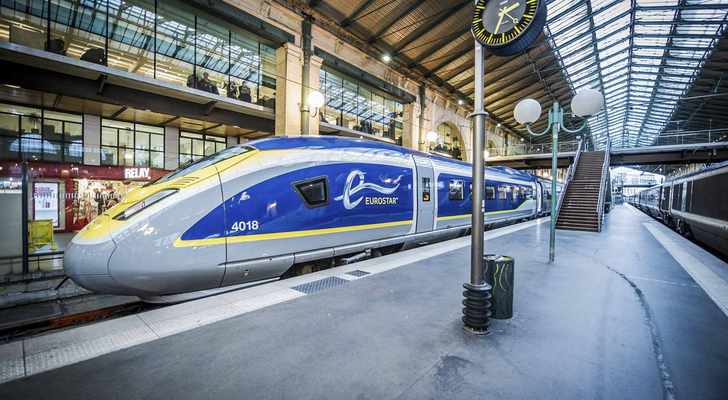
Eurostar: Fast, Relaxed Travel Through Smart Passenger Flow
Solution
On-vehicle automatic passenger counting (APC) devices are a market-proven method for measuring how many passengers enter and exit through equipped doors. Assuming the per-door data is reliably accurate, operators can, with some backend processing, determine passenger exchange times at the vehicle level.
The latest generation of APC technology goes further by aggregating per-door data into a single source. This aggregate figure, enabled by node-equipped APC technology, provides the most accurate measure of passenger exchange times.
To effectively address operators’ needs, such measurements must be:
-
Verifiably accurate, with accuracy rates reliably at 99%
-
Easy to aggregate, with automatic transfer of data to a defined source
-
Privacy-compliant, with all passenger counts processed directly on the device
Benefits
Capturing accurate passenger exchange time measurements enables operators to identify network-wide trends and patterns. By collecting these measurements across the entire fleet, operators gain privacy-compliant insights into how passenger behavior varies by location, infrastructure, and time of day.
In addition, the latest generation of APC technology provides real-time occupancy data and can detect objects and passenger attributes. Combined with passenger counts, these insights support:
-
Resolution of delay-causing challenges at specific stations
-
Optimized vehicle and route planning
-
Improved wayfinding and load balancing
Download now
Access a free Use Case PDF version now!
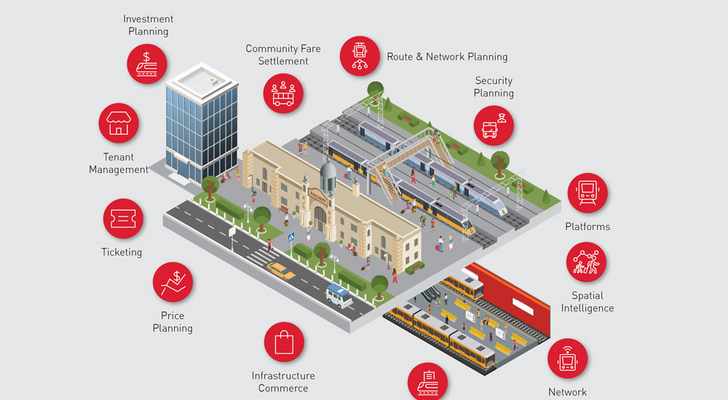 Use cases, Infographic, Transportation
A Map to Public Transportation Use Cases
- Case studies, Transportation
Eurostar: Fast, Relaxed Travel Through Smart Passenger Flow