Operational Analytics
Built on reporting and replays of historical data, Operational Analytics transforms terminal-activity history into a trusted basis for stakeholder alignment and future planning.
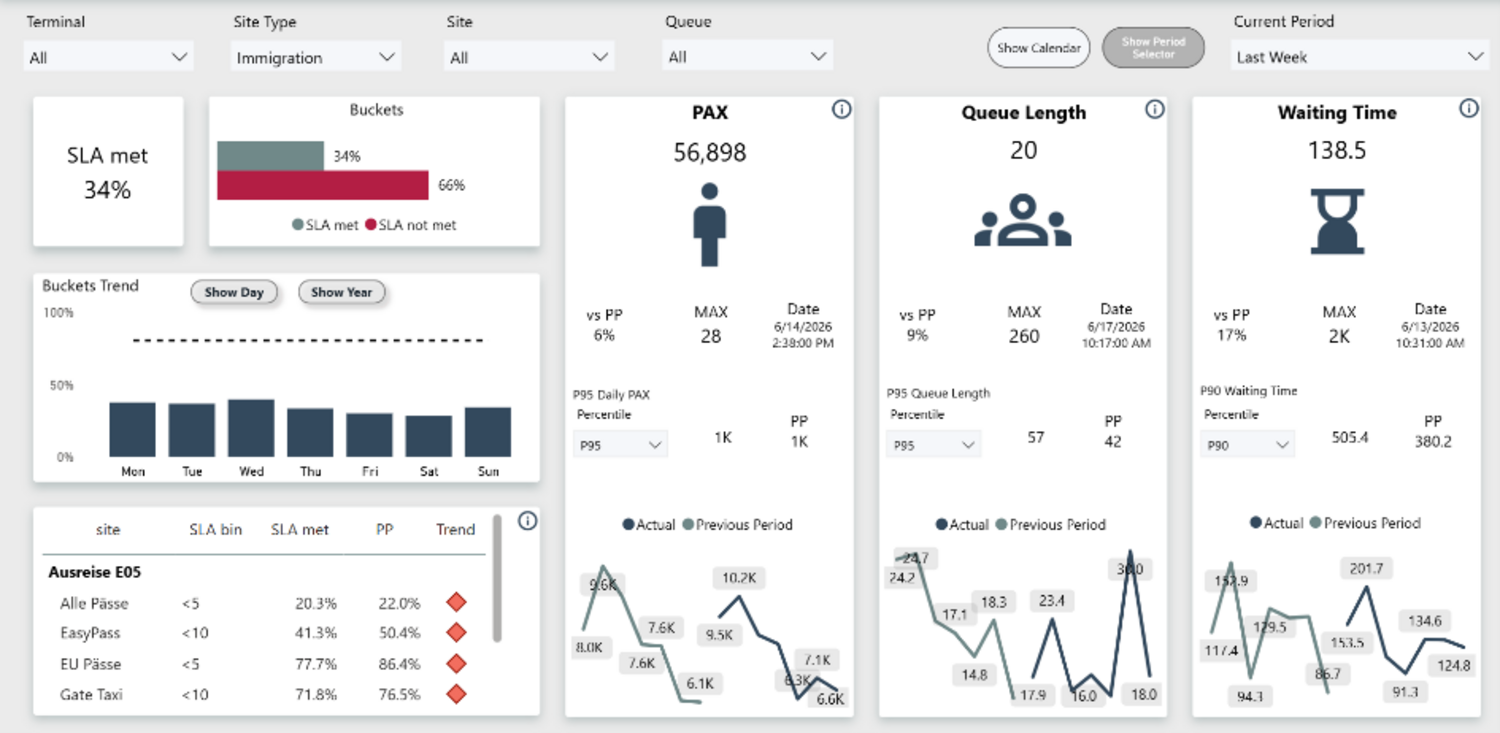
Acting as a single source of truth, it becomes the institutional memory that grounds audits, reviews, and long-term, fact-based planning. It enables airports to analyze past operations, create reports, and investigate events.
Verifying Performance
SLA Manager tracks waiting times against the service-level targets agreed with airlines, authorities and partners. In Operational Analytics, that record becomes proof: how often each target was met, where it slipped, and why.
- 1
Clearly Defined Targets
Set goals for each checkpoint or process, and every period is measured against the same standard.
- 2
Streamlined Compliance
Report SLA performance by day, week or season to show where service held and where it didn’t.
- 3
Verify Service
Breaches Replay the moments a target was missed to understand the cause, not just the outcome.
Your Terminal's Institutional Memory
Shifts change, teams rotate, and peaks fade from memory. Operational Analytics keeps the record: every count, wait, and occupancy level, stored consistently and ready to compare. As a single source of truth, it transforms post-event reviews, audits, and capacity planning from debates about what happened into discussions about what the data shows.
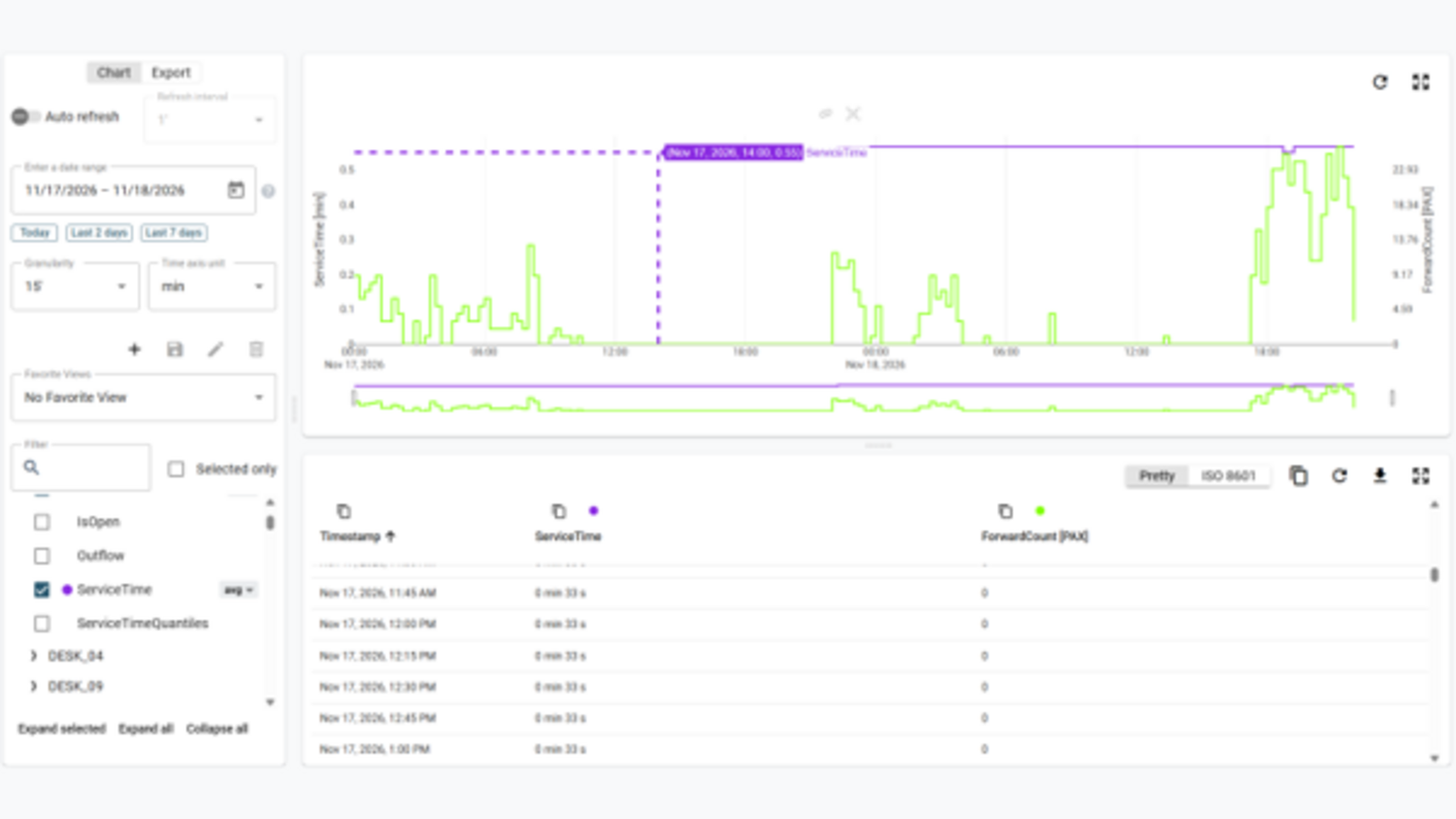
Data Analyzer
Mines weeks, months or years of operational data to reveal recurring patterns and long-term trends. Planners can base staffing, scheduling and investment decisions on how the terminal actually performs.
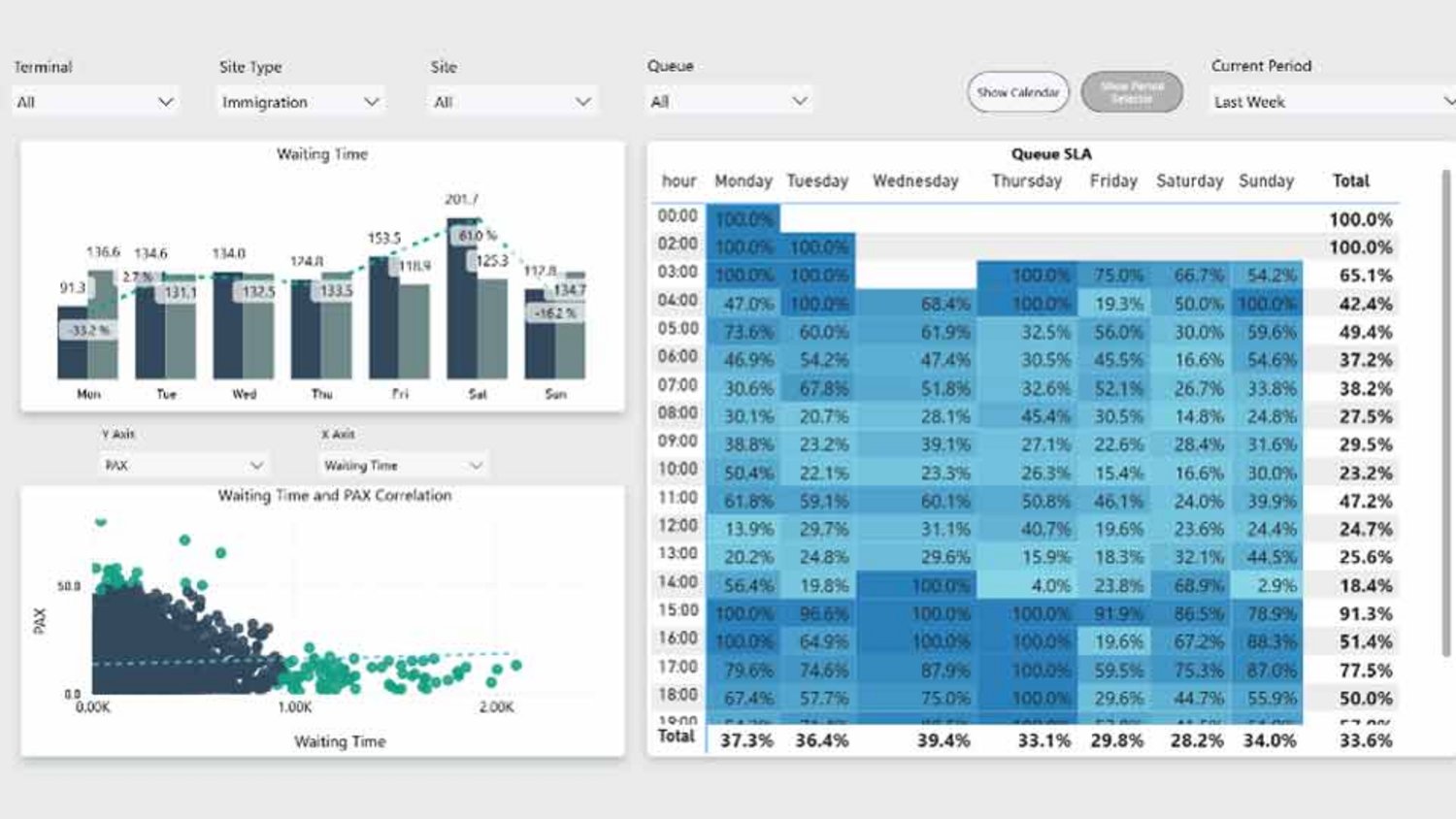
Reporting
Compiles operational data into clear, consistent reports for any time period, area or process. Results can be shared with stakeholders in a click, keeping everyone aligned on performance.
Replay
Steps back through recorded terminal activity to show exactly what happened, where and when. Teams can review incidents, peak periods or process changes in full context.
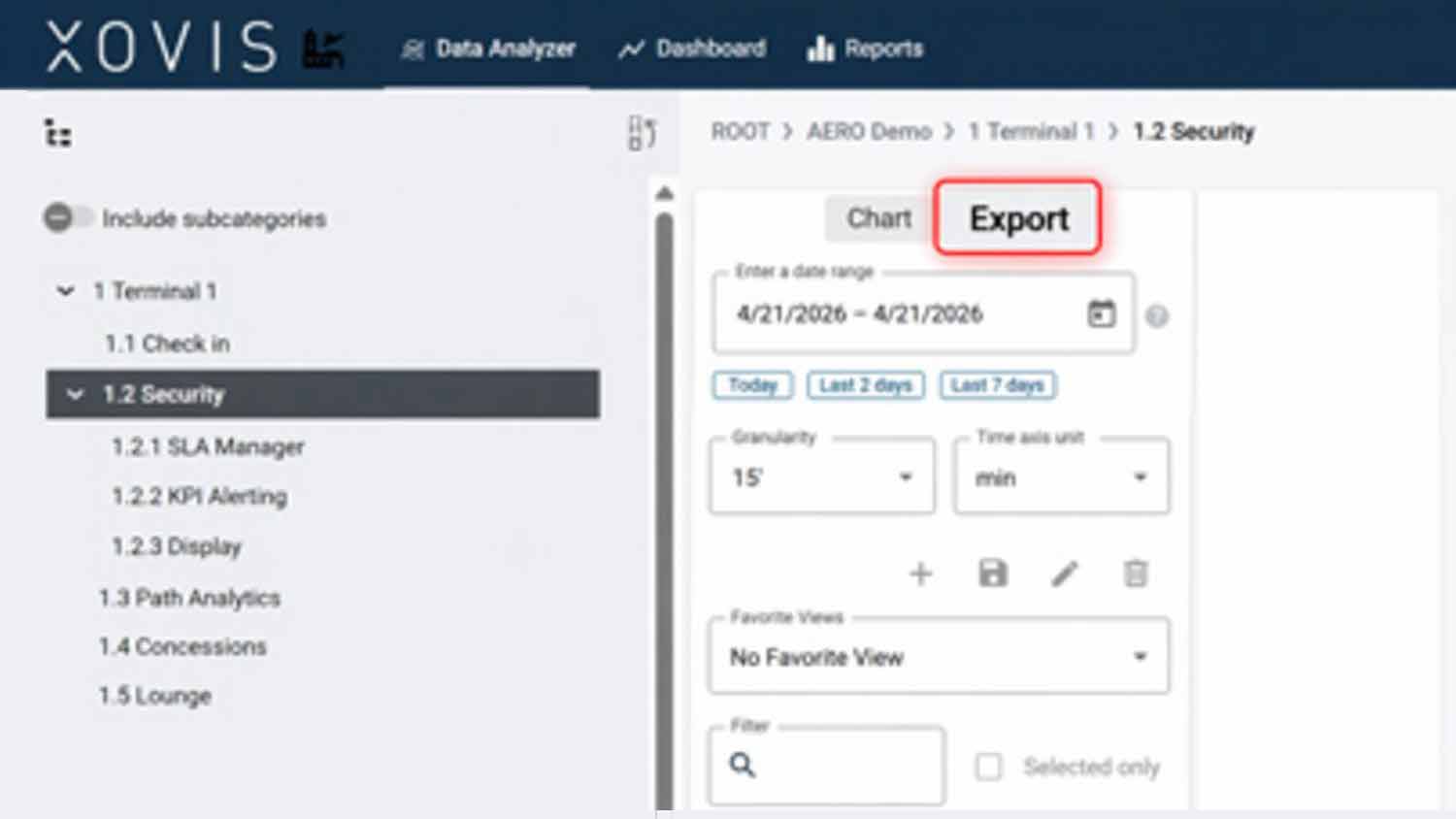
Export
Pushes operational data to external systems, business intelligence tools and data warehouses. Deeper analysis, archiving and integration with existing workflows stay simple.
Stakeholder Alignment
Staying informed of developments in and around terminals can be unnecessarily complex without a robust solution such as AERO. Automated data export can improve stakeholder relations, and objectively measuring compliance with service level agreements (SLAs) reduces time spent on performance reviews.
How Smart is Your Airport?
Managing passenger flows at airport terminals without accurate, actionable insights is hard. AERO makes it easy by enabling operators to combine AI-powered insights with human expertise.
Explore the other four focus areas supporting Smart Airports around the world.
Connect with us today
More than 120 airports globally use Xovis’ Passenger Flow Management System to optimize operations. A trusted, one-stop-shop partner with more than 15 years of airport experience, Xovis can help ease capacity constraints and boost airside revenue at your terminal. Interested? Get in touch today.