Zone Intelligence
Zone Intelligence quantifies how the defined areas of a terminal are used over time. Measuring patterns through zone, how full each zone is, and how long people remain, terminal operators are able to understand how passengers move and cluster in corridors, baggage halls and gates.
The output is not a headcount but a performance read on each space: where it is underused, where it is strained, and where it drives value — monitored live and analyzed over time.
Gate-to-Curb Measurements
Baggage claim and public transport queuing areas are the last steps of the gate-to-curb journey, and the ones passengers remember. Crowding at belts or a crowded spilling taxi queue undoes every minute saved upstream, yet these spaces are often the least measured. Zone Intelligence shows how full they are and how long people wait, so arrivals teams can open belts, call in transport and keep the final stretch moving.
- 1
Better Facility Utilization
Knowing how each area is actually used lets teams right-size cleaning, seating and space allocation to real demand.
- 2
Improved Passenger Comfort
Keeping occupancy below crowding thresholds in lounges, restrooms and gates keeps spaces calm.
- 3
Increased Commercial Engagement
Understanding footfall and dwell near concessions lifts engagement and tenant performance.
- 4
Enhanced Safety
Early visibility of overcrowding and unusual occupancy supports faster, safer crowd management.
One Consistent Measure for Every Zone
Terminals are made of very different spaces, and each is usually managed by a different team. Zone Intelligence gives them a common language: the same fill-level and dwell metrics, whether the space is a restroom or a gate lounge.
Because zones are defined in software, they can be redrawn as the terminal changes — without re-installing sensors.
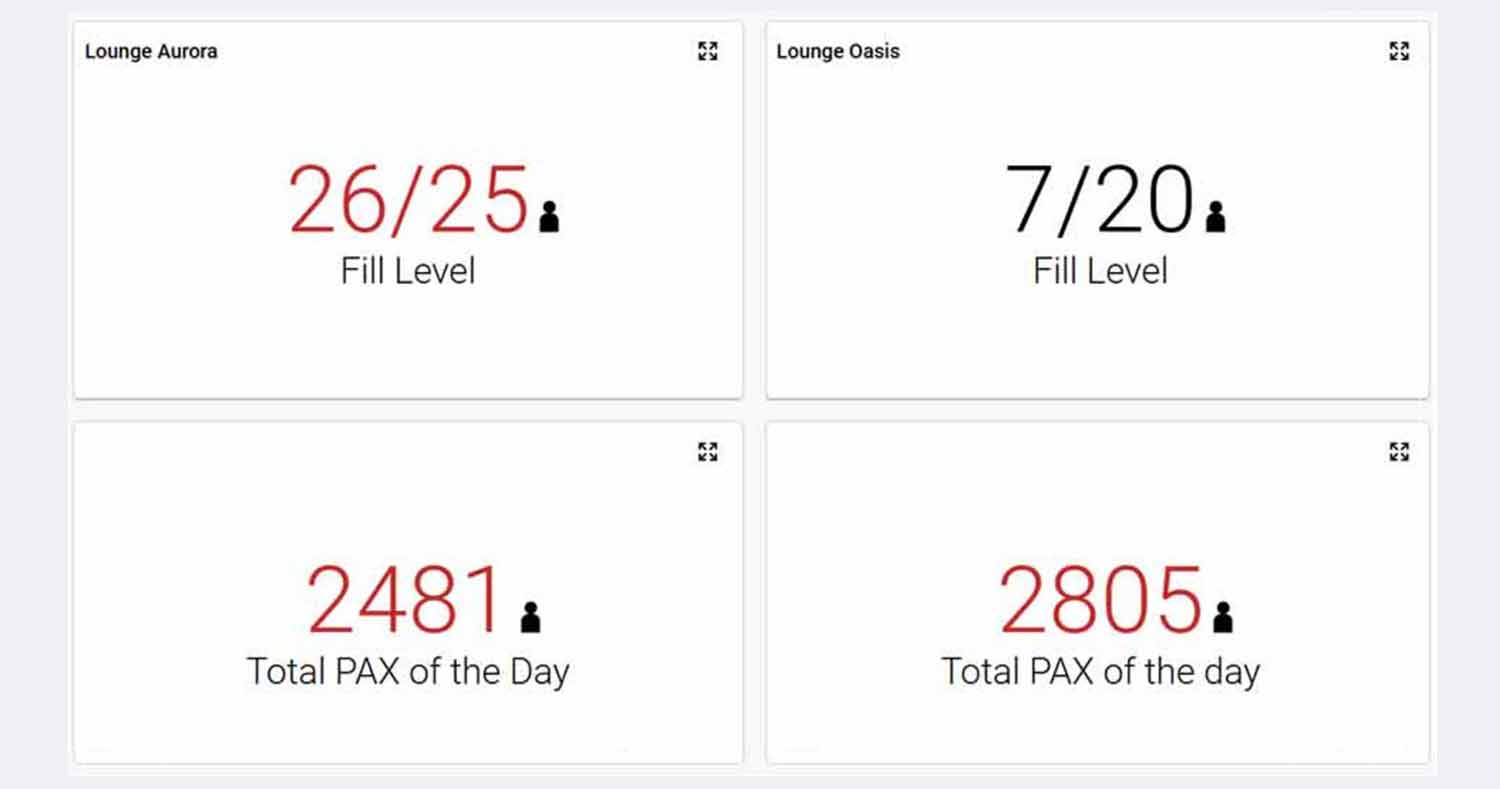
Fill Level
Reports how full a defined area is at any given moment, measured against its capacity and comfort thresholds. Teams can manage crowding in gates, lounges and retail areas before it affects passengers.
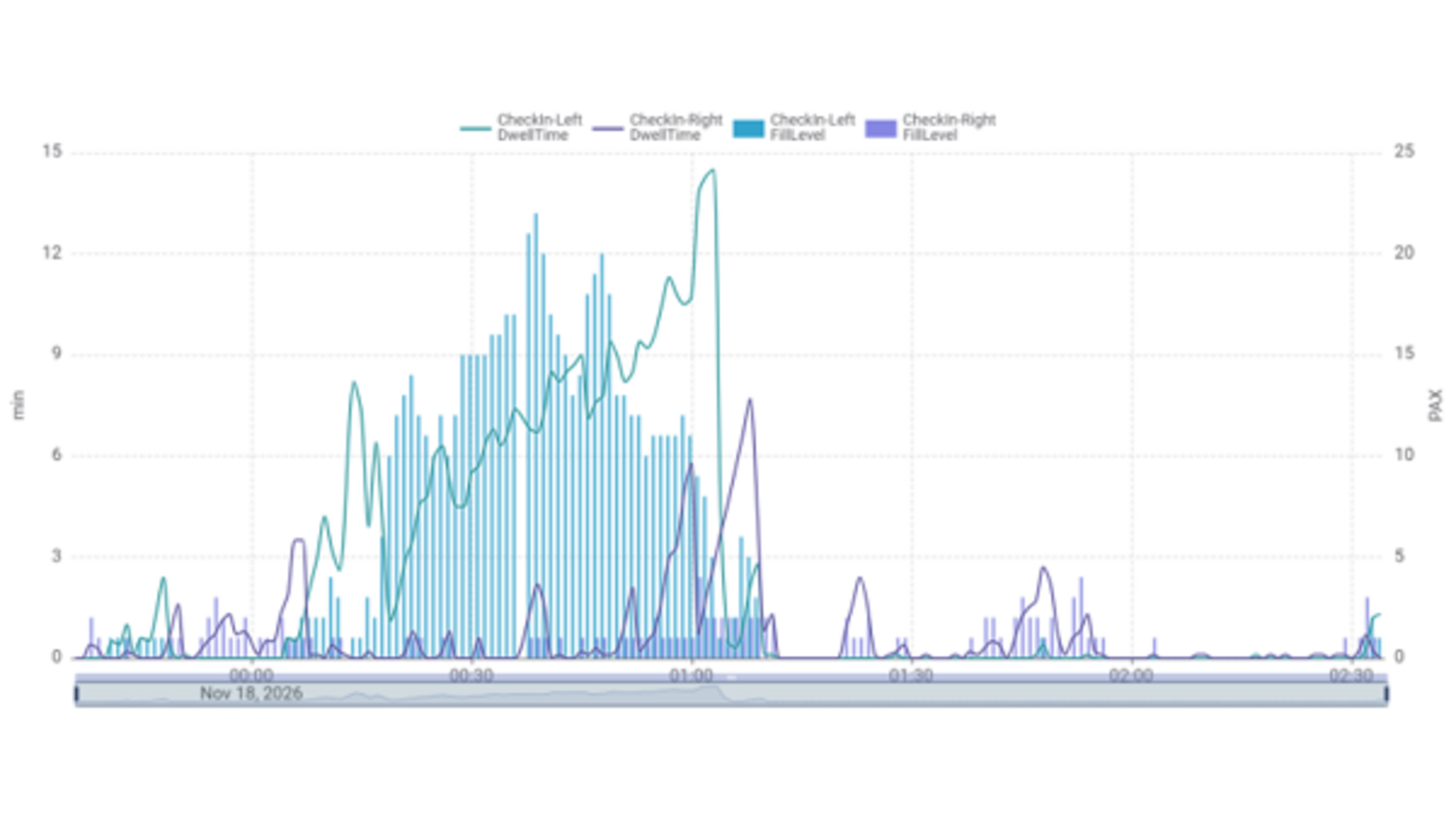
Dwell Time
Measures how long people stay in a specific area, from seating zones to retail and waiting spaces. It separates healthy, intended use from congestion, giving a clearer picture of how space performs.
Heatmaps
Visualizes where people concentrate and linger within a zone over any period of time. Hotspots and underused space surface at a glance, supporting smarter layout and resource decisions.
How Smart is Your Airport?
Managing passenger flows at airport terminals without accurate, actionable insights is hard. AERO makes it easy by enabling operators to combine AI-powered insights with human expertise.
Explore the other four focus areas supporting Smart Airports around the world.
Connect with us today
More than 120 airports globally use Xovis’ Passenger Flow Management System to optimize operations. A trusted, one-stop-shop partner with more than 15 years of airport experience, Xovis can help ease capacity constraints and boost airside revenue at your terminal. Interested? Get in touch today.